

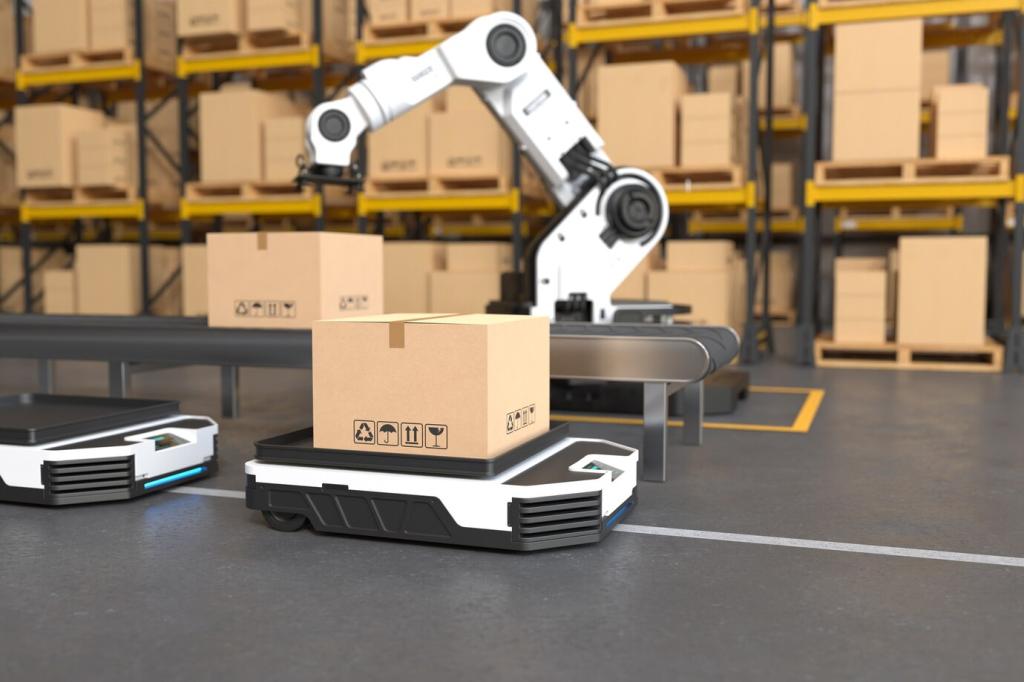
Optimizing Supply Chain Efficiency through Warehouse Automation

Why Warehouse Automation Is the Supply Chain Multiplier

When automated receiving syncs with putaway and replenishment, upstream delays stop cascading into picking and shipping. One apparel brand saw order cycle time drop from three days to under twenty hours after connecting automated sortation with their WMS. Tell us where your handoffs still get stuck.
Throughput, order accuracy, lines picked per labor hour, and dock-to-stock time tell a clearer story than speed alone. A mid-market distributor measured a 28 percent throughput lift and 35 percent fewer re-picks within two quarters. Which metric would convince your leadership to scale?
During peak season, a home goods retailer faced nightly overtime and missed cutoffs. After piloting autonomous mobile robots in just two aisles, they hit carrier time windows for the first time in months. Their night shift lead joked, “The robots don’t drink coffee, but we finally can.”
Map Reality, Not Assumptions
Shadow pickers, time the walks, and follow replenishment during peak. Value stream maps often reveal that a five-minute delay hides in a thirty-foot detour. Fix the path first, then automate. Share a surprising bottleneck you discovered only after walking the floor end to end.
Upskilling the Workforce with Safety in Mind
Operators become system maestros when trained to manage exceptions, not just tasks. Safety zones, light curtains, and co-bot protocols keep people confident. One associate said, “I’m less exhausted and more in control.” How could reskilling change morale and retention in your facility?
Pilot, Prove, and Phase
Start with a high-impact SKU family or zone, wrap it with clear success metrics, and stage expansion only after stability. A phased rollout turns resistance into advocacy as wins accumulate. What small pilot could you run within ninety days to build unstoppable momentum?

WMS, WES, and ERP: Who Orchestrates What?

A warehouse management system governs inventory truth; a warehouse execution system sequences work; ERP aligns financial and planning realities. Make roles explicit to avoid conflicting instructions. Consider a message bus for resilience. Which system currently overrides others and causes unnecessary firefighting?

Digital Twins and Simulation

Before hardware lands, simulate flows to test slotting, waves, and resource allocation. A digital twin revealed a replenishment choke point that only appeared at 11 a.m. when e-commerce orders spiked. Running “what if” scenarios saves expensive rework. Would you trust a model to set your staffing?

ROI, Risk, and Resilience

Cost Models and Payback Windows

Blend capex, integration, training, and maintenance with labor savings, throughput gains, and error reduction. Include avoided costs like lease expansions. Many programs target two-to-four-year paybacks, but pilots can validate assumptions in weeks. Which savings line item is hardest for your finance team to trust?

Redundancy and Uptime Strategy

Design parallel flows and spare capacity for critical nodes like print-and-apply or outbound sorters. Measure mean time between failures and schedule preventive maintenance by data, not guesses. How many minutes of downtime break your carrier cutoff? Share your number to benchmark with peers.

Cybersecurity and Vendor Dependence

Segment networks, rotate credentials, and track software bills of materials. Demand clear support SLAs and on-prem fallbacks for core functions. A single insecure tablet once halted a conveyor zone. What is your plan if a cloud outage collides with a holiday surge?
Energy Efficiency at Scale
Regenerative braking on conveyors, smart charging for mobile robots, and right-sized motors reduce peak draw. LEDs tied to motion sensors cut lighting loads in low-traffic aisles. One site lowered energy costs by 18 percent after tuning idle states. Where could your facility sleep smarter?
Packaging Automation and Waste Reduction
Right-sized packaging eliminates dunnage and shipping air, shrinking freight emissions and damages. Automated cartonization also boosts pack station ergonomics. A cosmetics brand reduced DIM weight fees materially by shifting to on-demand boxes. Would your carriers notice if every carton fit like a glove?
Designing a Greener Network
Automation enables micro-fulfillment closer to customers, shortening last-mile routes and returns loops. Better inventory accuracy means fewer emergency expedites. Share whether your sustainability goals include return rate reductions, reusable totes, or energy benchmarks—we will feature creative ideas in a future post.

What’s Next: Trends Shaping the Automated Warehouse

Cobots and AMRs will increasingly assist rather than replace, handling travel while people handle judgment. Expect better intent sensing and safer shared zones. Operators like Marcus often report less fatigue and more ownership. How would collaboration change your training roadmap and job ladders?

What’s Next: Trends Shaping the Automated Warehouse

Modular systems drop into backrooms, cross-docks, or urban hubs, turning inventory into same-day promises. Retailers can re-balance in weeks, not quarters. If your demand is spiky and dense, micro-fulfillment could smooth peaks. Would a neighborhood node help you beat cutoffs without new leases?

What’s Next: Trends Shaping the Automated Warehouse

Low-latency networks and edge computing will move decision-making closer to the floor, improving responsiveness during spikes. That also means stronger local resilience if the cloud hiccups. Which decision today takes too long to travel from the floor to the system and back again?

What’s Next: Trends Shaping the Automated Warehouse

Lorem ipsum dolor sit amet, consectetur adipiscing elit. Ut elit tellus, luctus nec ullamcorper mattis, pulvinar dapibus leo.

Naviroxaloveroniq
Privacy Overview

This website uses cookies so that we can provide you with the best user experience possible. Cookie information is stored in your browser and performs functions such as recognising you when you return to our website and helping our team to understand which sections of the website you find most interesting and useful.